Johns Hopkins/Harvard NeuroBricks Library
October 31, 2024
Explore how the Johns Hopkins-Harvard Neurology Clinical Bricks Library is transforming neurology education through a collaborative, learner-centered model. Designed to bridge gaps in clerkship experiences, this initiative delivers equitable, case-based digital resources tailored to the needs of modern medical students. Built with a multi-tiered mentorship structure, the project enables learners at all levels—from pre-med to senior faculty—to contribute to scholarly content creation while reducing burdens on educators.
In this video, you’ll learn about the project’s innovative authorship and peer review process, its global partnerships with institutions in Ghana and Zambia, and the principles behind its approach to content design. From enhancing clinical reasoning to supporting underserved learners, the Bricks Library showcases how digital scholarship can break down geographical and structural barriers while building a dynamic, scalable curriculum.
Explore More Webinars
-
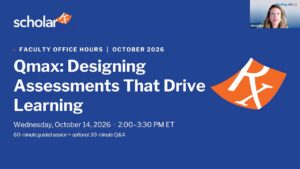
ScholarRx Office Hours: Engaging Students Through Assessment with Qmax Discover how to make the most of ScholarRx’s assessment tools in this hands-on Office Hours session led by Nikki Dalton. Learn how to find relevant Qmax questions, organize and collaborate on question pools, create and assign assessments, and track student learning.…
-
Discover how to turn educational content into engaging, active learning experiences with Rx Bricks. In this hands-on ScholarRx Office Hours session, Nikki Dalton demonstrates how faculty can find, share, customize, and create Bricks to support their teaching. Learn how to organize content using Brick Lists, adapt existing Bricks to meet course objectives, and use TAI (Teaching with AI) to streamline content creation. The session also explores practical ways to increase student engagement, support flipped classrooms, and save faculty time.
-
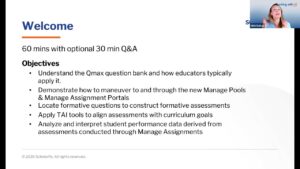
Explore practical Qmax workflows for building, managing, and analyzing formative assessments, including faculty tools, assessment insights, and TAI-assisted question creation.