Office Hours | Qmax: Building Formative Assessments
February 9, 2026
Formative assessments are a powerful tool for promoting active learning in medical education. By engaging students with board-style questions and immediate feedback, faculty can foster deeper understanding, identify learning gaps early, and encourage self-directed improvement. Join us to learn how our new Qmax faculty tools enhance this process by ensuring assessments are both inclusive and adaptive to diverse learner needs. When used effectively, formative assessments not only improve knowledge retention but also support long-term clinical reasoning and decision-making skills.
🚀 You will learn about these new enhancements:
- Manage Assignments
- Manage Pools
- Test Retakes
- Auto Close
- Time Accommodations
- Question Search
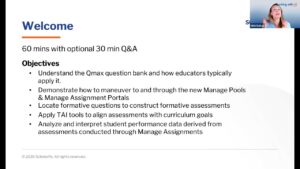
This interactive session will guide participants through:
- The NEW Manage Assignments & Manage Pools Dashboard
- How to use TAI (Teaching with Artificial Intelligence) to build assessments that align with your curriculum
- Analyze the results of your formative assessments
Whether you’re new to Qmax or looking to optimize your current workflow, this session will showcase powerful new features that improve both faculty collaboration and student experience.
Explore More Webinars
-
Explore practical Qmax workflows for building, managing, and analyzing formative assessments, including faculty tools, assessment insights, and TAI-assisted question creation.
-
Explore practical ways to use TAI to accelerate medical education content development while maintaining faculty oversight, academic rigor, and instructional quality.
-
Explore practical Qmax workflows for building, managing, and analyzing formative assessments, including new faculty tools and TAI-assisted assessment creation.