
Add Clinical Reasoning to Your Curriculum—Without Rebuilding It
Help students connect foundational science to real patient care using structured, patient-centered learning.
Medical education isn’t just about knowing diseases; it’s about learning to think clinically.
With ScholarRx’s Clinical Bricks, faculty gain access to two integrated libraries that build knowledge and reinforce reasoning, plus a powerful authoring platform to adapt content to any curriculum.
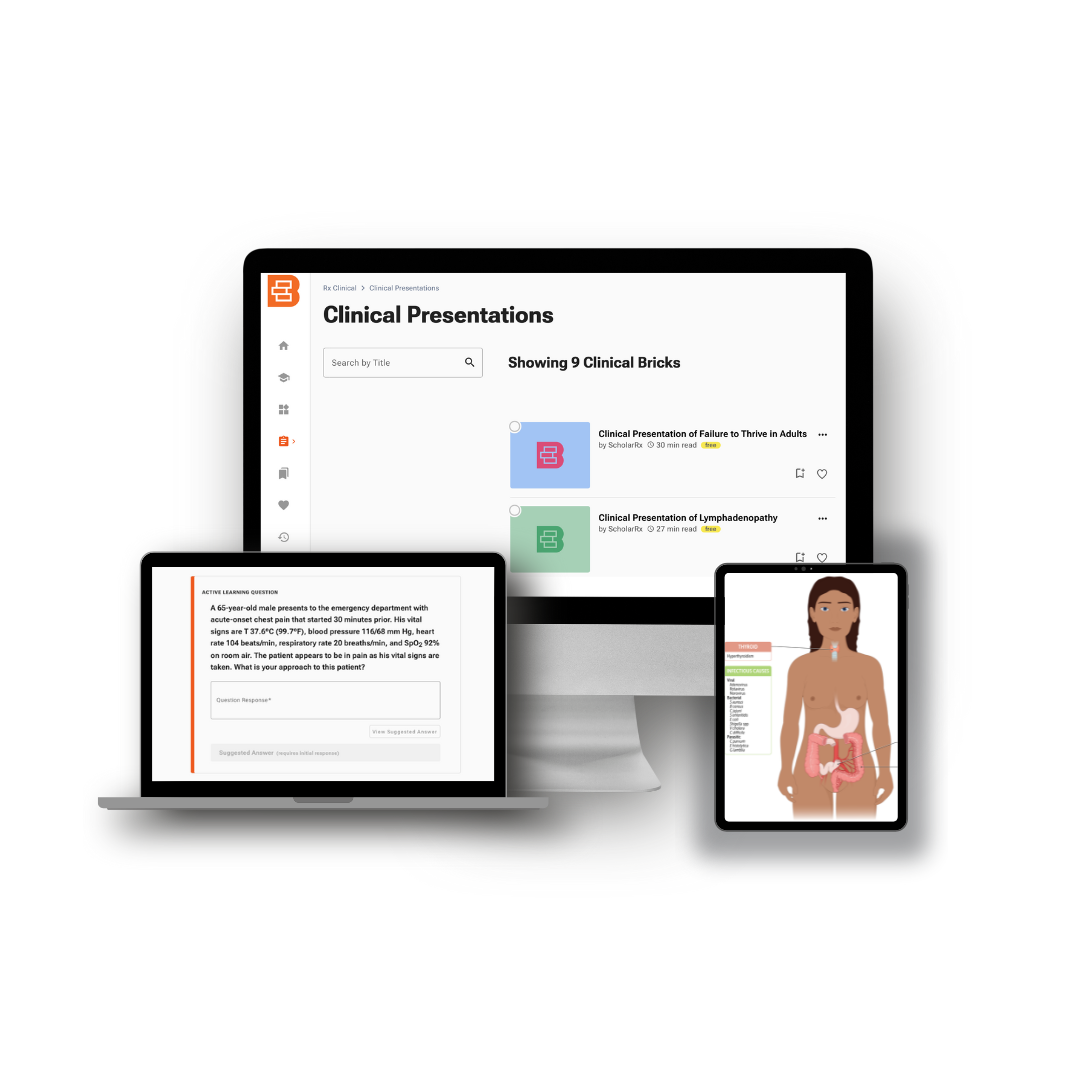
Supporting the Full Arc of Clinical Learning
Clinical reasoning doesn’t happen in a vacuum. Students need both a solid base of clinical knowledge and opportunities to apply that knowledge in realistic scenarios.
Clinical Bricks supports both.
-
Over 400 Introduction to Clinical Medicine (ICM) Bricks, covering core clinical knowledge — including systems, processes, and common disorders — ideal for preclinical years and clinical prep.
-
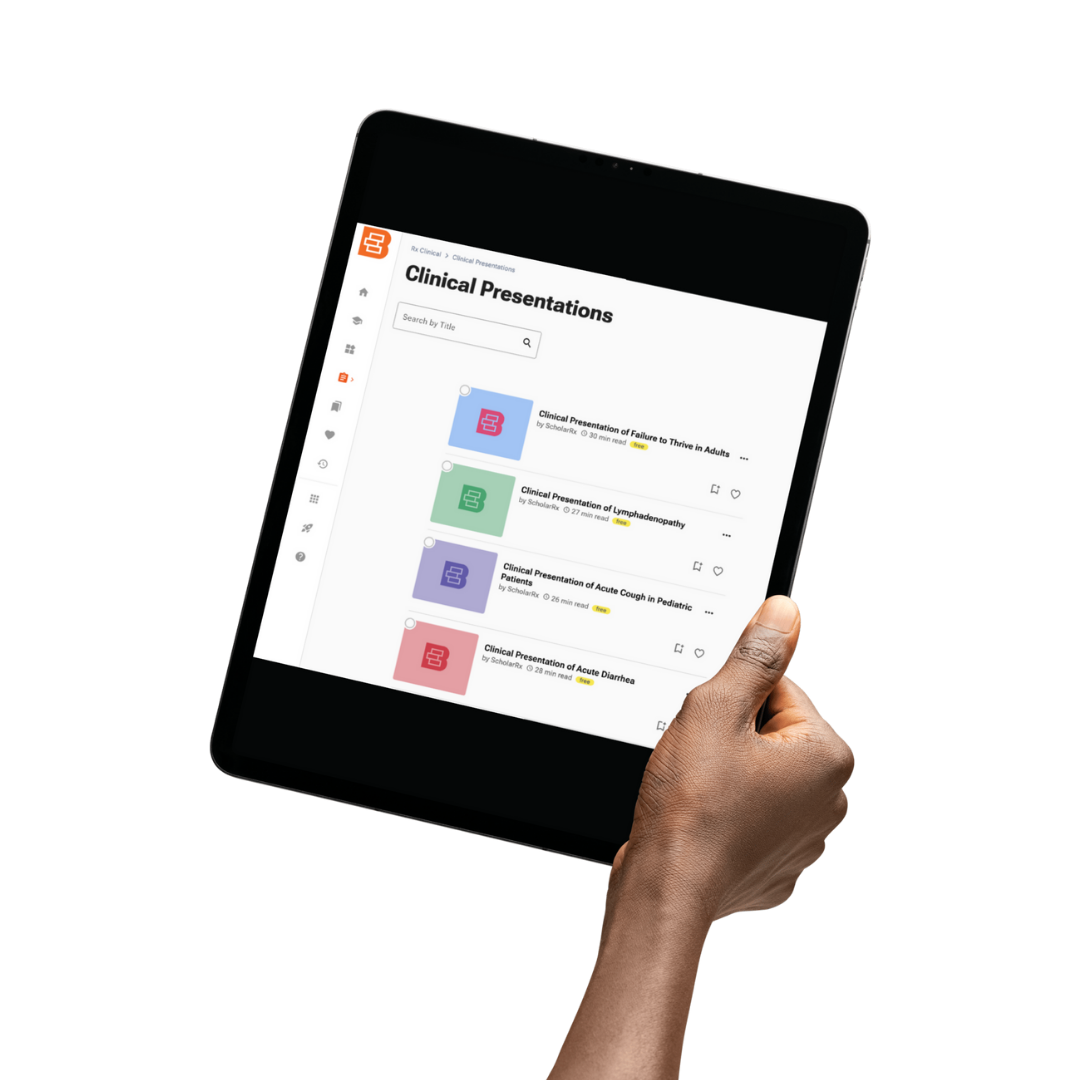
A growing library of Clinical Presentation Bricks, designed to teach and reinforce clinical reasoning through realistic, patient-centered cases, optimized for clerkships and clinical teaching
All Bricks are modular, interactive, and fully editable through Bricks Create, allowing faculty to adapt, remix, or author content that fits their goals, curriculum, and teaching approach.
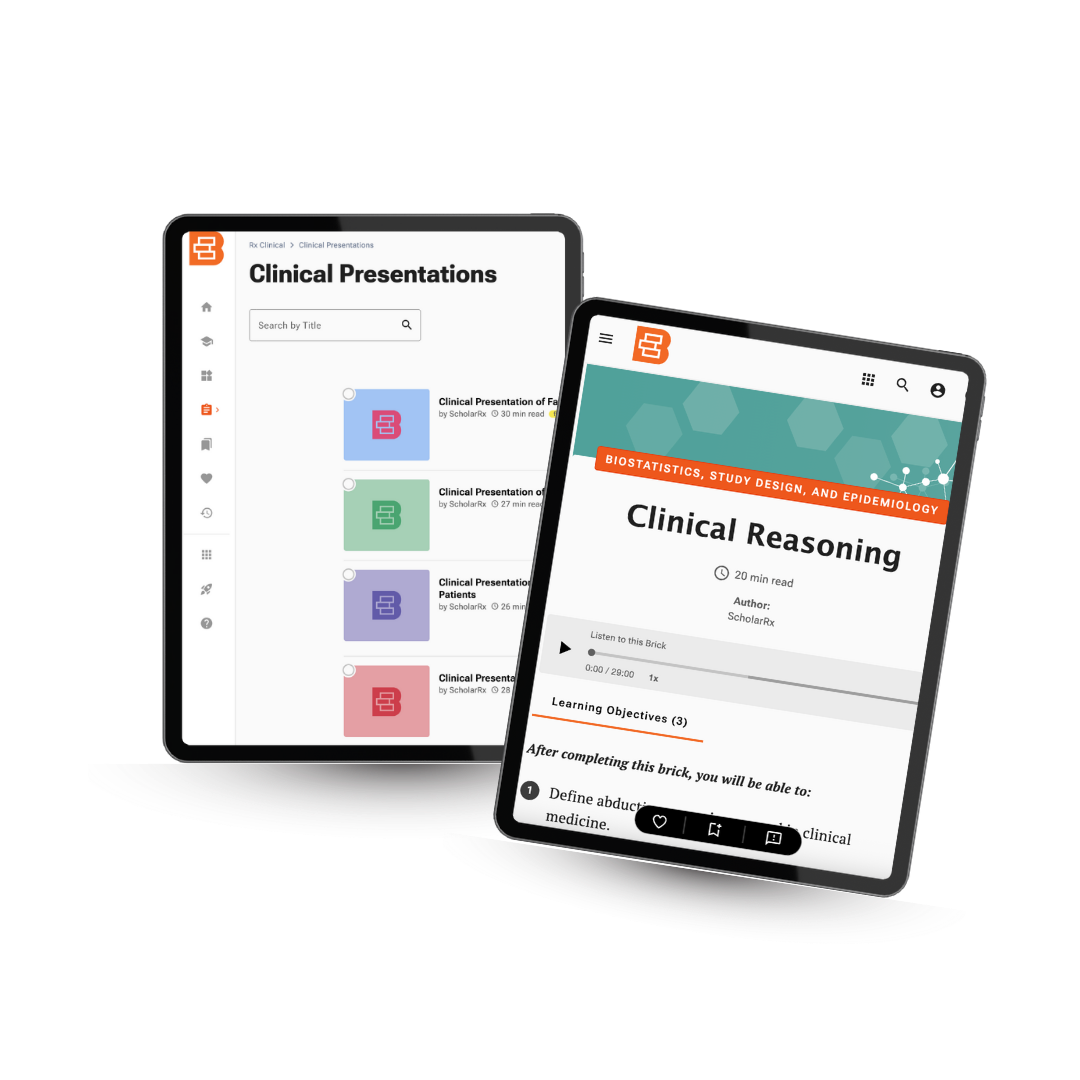

Building on a Strong Foundation
Our Introduction to Clinical Medicine (ICM) Bricks have already helped thousands of students connect basic science with clinical care. With more than 400 Bricks covering systems, processes, and disorders, these modules build a solid foundation of knowledge.
But knowledge alone isn’t enough.
How Clinical Presentation Bricks Work
Each brick uses a consistent structure based on the illness script model, guiding students through:
- Chief concern assessment and evaluation of patient stability
- Strategic data gathering (focused history and physical examination)
- Problem representation and pattern recognition
- Hypothesis generation and development of a differential diagnosis
- Working diagnosis selection and planning of diagnostic testing
Clinical Presentations Library
Clinical Presentations Library
Patient-Centered Approaches to Clinical Reasoning
Chest Pain • Palpitations • Acute Dyspnea • Cough • Wheezing • Hemoptysis • Hypertension • Edema • Syncope
Headache • Headache in Pediatric Patients • Memory Loss • Acute Altered Mental Status • Weakness • Focal Weakness • Dizziness and Vertigo • Tremor • Acute Vision Changes • Seizures (Adults and Children) • Numbness and Sensory Changes • Aphasia • Dysarthria • Gait Disturbances in Adults • Gait Abnormality in Children
Sore Throat • Hearing Loss • Tinnitus • Ear Pain • Red Eye (Eye Injuries) • Rash in Adults • Itch / Pruritus
Depressed Mood • Anxiety • Psychosis • Mania • Suicidal Ideation • Sleep Disturbance
Abdominal Pain • Abdominal Pain in Children • Diarrhea • Constipation • Nausea and Vomiting • Dysphagia • Upper GI Bleed • Lower GI Bleed • Jaundice in Adults • Abdominal Mass • Abdominal Distention
Dysuria • Hematuria • Urinary Incontinence • Urinary Obstruction / Hesitancy • Vaginal Bleeding • Vaginal Bleeding in Pregnancy • Postpartum Hemorrhage • Vaginal Discharge • Breast Lump • Pelvic Pain • Amenorrhea / Irregular Menstrual Bleeding • Dysmenorrhea • Hirsutism • Scrotal Mass
Fever • Fatigue • Unintentional Weight Loss • Weight Gain • Bleeding and Bruising • Anemia in Adults • Lymphadenopathy • Failure to Thrive in Adults
Joint Pain • Back Pain • Neck Mass • Fractures / Dislocations • Trauma (Blunt, Penetrating, Head)
Key Advantages
✅ Patient-Centered Focus
Begins with how patients actually present—not textbook diagnoses
✅ Clinical Reasoning Development
Teaches how to think, not just what to memorize
✅ Enhanced Learning Features
Includes multiple-choice questions, clinical reasoning callouts, and schematic visuals
✅ Real-World Application
Interactive elements help students apply knowledge in realistic clinical scenarios

The Next Step: Learning to Think Like a Clinician
Students must be able to translate knowledge into action. That’s where Clinical Presentation Bricks come in.
Instead of starting with a diagnosis, these modules begin with the patient’s concern, chest pain, dizziness, cough, memory loss, and guide learners step by step through reasoning toward a diagnosis and management plan.
What Educators Are Saying About the New Clinical Bricks
Ready to Transform Clinical Education?
Contact us to explore how Clinical Presentation Bricks can help your students build robust clinical reasoning skills, starting with the patient.